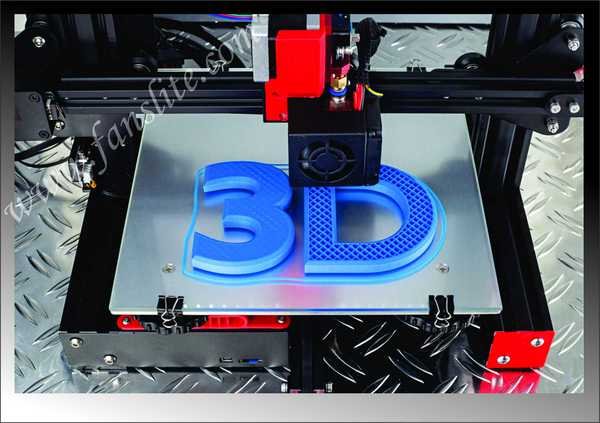
As much as 3D-printed organs have advanced, creating them is still a slow process that can damage the tissue. There may soon be a quicker and more effective method, however.
Researchers from the University at Buffalo and elsewhere have developed a 3D printing technique that’s 10 to 50 times faster than standard methods.
A tiny synthetic hand (shown above) that would have taken six hours to print took just 19 minutes — enough to minimize the deformation and cellular damage from earlier systems.
This technique is called “cryobioprinting,” the Daily Beast reported. Building on the existing 3D printing method for tissues, the organs are made out of “bioink” derived from living cells and a gelatin-like substance. It’s applied to a surface until the desired organ’s tissue structure is created.
Conclusion. 3D bioprinting is a rapidly emerging industry that could benefit both human and veterinary medicine. Advances in bioprinting have led to the production of higher resolution bioprinters, improved vascularization of printed tissues, and the generation of in vitro and in vivo tissue models.
Also Read: How to Download and Create Facebook Avatar – Facebook App For Avatar Help
3D printing is being used in the medical sector to help save lives by printing organs for the human body such as livers, kidneys and hearts.
Further advances and uses are being developed in the healthcare sector providing some of the biggest advances from using the technology.
Also Read:
3D printing is used for the development of new surgical cutting and drill guides, prosthetics as well as the creation of patient-specific replicas of bones, organs, and blood vessels.
Recent advances in 3D printing in healthcare have led to lighter, stronger and safer products, reduced lead times and lower costs.
Benefits to society
3D printing leads to a reduction of wastes and thus, there is no requirement of reducing, reusing, and recycling the waste materials every now and then. … Due to the high degree of accuracy and precision, one can print even the slightest of variations neatly.
The main advantages of 3D printing are realized in its Speed, Flexibility, and Cost benefits. For small production runs, prototyping, small business, and educational use, 3D printing is vastly superior to other industrial methods.
The new approach uses a combination of stereolithography with hydrogels. By precisely guiding photopolymerization, the team could quickly and continuously supply the necessary hydrogel solution and maintain “nonstop” growth.
The output is currently limited to “centimeter-sized” models, but it’s already well-suited to printing cells with built-in blood vessel networks. That will be crucial for the eventual production of human-sized organs.
3D bioprinting prints 3D structures layer by layer, similar to 3D printers. Using this technique, our research team created a porous structure made of the patient’s neural cells and a biomaterial to bridge an injured nerve. We used alginate — derived from algae — because the human body does not reject it.
Friedrich Stiftung Scholarships 2024 - Pursue your studies in Germany. Good news! Applications for the…
NL Scholarship 2024 - Start your study adventure in the Netherlands. Good news! NL Scholarship…
Shiraz University of Medical Sciences Scholarship 2024 - Pursue your studies in Iran. Good news!…
Edith Cowan University Scholarship 2024 - There is an opportunity for you to pursue your…
Southern Cross University Scholarships 2024 - Pursue your studies Australia. Good news! Southern Cross University…
Bond University Undergraduate Scholarship 2024 - Start your study adventure in Australia. Good news! Bond…
